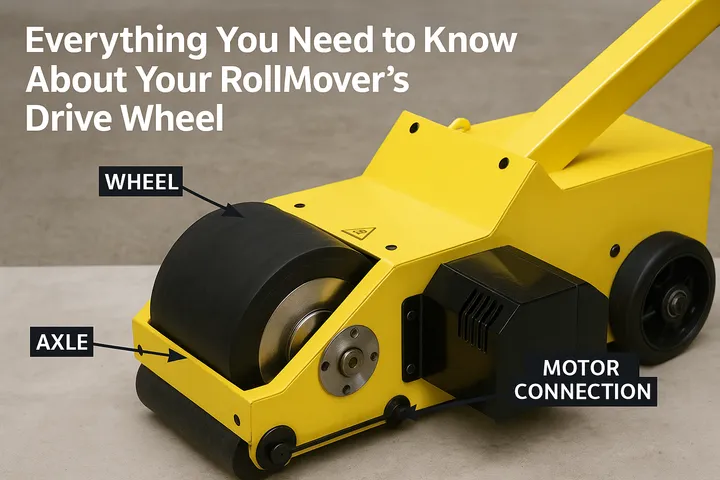
Everything You Need to Know About Your RollMover's Drive Wheel
When you think about your RollMover’s performance, you might focus on the motor or the battery. But there’s one component that’s absolutely critical for turning power into motion: the drive wheel. This single part is responsible for gripping the floor and propelling your heavy loads.
At Artic Power Solutions, we know that the quality of your drive wheel directly impacts your RollMover’s efficiency, safety, and reliability. That’s why we’re taking a deep dive into everything you need to know about this essential component.
What Does the Drive Wheel Do?
Simply put, the drive wheel is where the rubber meets the road—or in this case, the warehouse floor. It’s connected to the motor and drivetrain, and its sole purpose is to transfer the motor’s rotational force into the linear motion that moves your rolls. It’s designed to provide the perfect amount of traction to move heavy loads without slipping, ensuring smooth and consistent operation.
Common Signs of a Worn-Out Drive Wheel
A worn drive wheel can cause a variety of problems. Look out for these common symptoms:
- Visible Wear and Tear: The most obvious sign is physical damage. Look for cracks, chunks of material missing, or flat spots on the wheel’s surface.
- Loss of Traction: If you notice the drive wheel slipping or spinning without moving the load, it’s a clear indication that the tread is worn down and can no longer grip the floor effectively.
- Reduced Speed and Power: A worn wheel can lead to a noticeable decrease in your RollMover’s top speed and pulling power.
- Increased Vibration or Noise: A wheel that is no longer perfectly round will cause vibrations and noise during operation.
These symptoms are among the 5 Common Issues with RollMovers that can indicate a need for maintenance.
The Risks of Using a Worn Drive Wheel
Ignoring a worn-out drive wheel is more than just an inconvenience; it can be a significant risk.
- Safety Hazards: A lack of traction can compromise the operator’s control over the load, especially when stopping or turning.
- Decreased Efficiency: A slipping wheel wastes energy and makes every move take longer, reducing your operational efficiency.
- Damage to Other Components: A worn or unbalanced wheel can put extra strain on the motor, bearings, and drivetrain, leading to more costly repairs down the road.
What to Look For in a Quality Replacement
When it’s time to replace your drive wheel, not all parts are created equal. Here’s what you should look for:
- Durable Materials: A quality replacement wheel will be made from high-grade materials, like a specific durometer (hardness) of polyurethane, that is designed to withstand the demands of your specific application.
- Proper Tread: The tread pattern is engineered for optimal traction on a variety of warehouse floor surfaces.
- Perfect Fit and Compatibility: It is crucial to use a wheel that is designed to fit your RollMover model perfectly. An ill-fitting wheel can cause damage and safety issues.
Your Source for High-Quality Drive Wheels
The drive wheel is a small part that makes a big difference. By paying attention to its condition and investing in a high-quality replacement when the time comes, you can ensure your RollMover operates safely, efficiently, and reliably for years to come.
If you’re seeing any of the warning signs, don’t wait for a breakdown. Order a new durable polyurethane drive wheel from our store today.
Contact us today to order your replacement drive wheel or to schedule a professional installation!