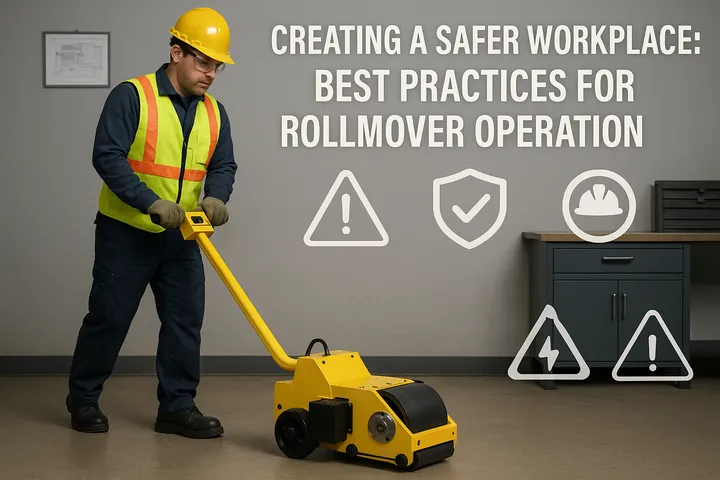
Creating a Safer Workplace: Best Practices for RollMover Operation
A RollMover is an incredibly powerful tool for enhancing efficiency and reducing physical strain in your workplace. However, like any piece of heavy machinery, its safe operation is paramount to preventing accidents and ensuring the well-being of your team.
At Artic Power Solutions, we believe that a safe workplace is a productive workplace. That’s why we’ve compiled this essential list of best practices for operating your RollMover. Following these guidelines can significantly reduce the risk of accidents and create a safer environment for everyone.
1. Conduct a Pre-Operation Inspection
Before every shift, the operator should perform a quick walk-around inspection of the RollMover.
- Check for any visible damage to the frame, handle, or wheels.
- Ensure the battery is adequately charged.
- Test the horn and the “belly button” emergency reverse switch.
- Make sure all controls are functioning correctly. A machine in good working order is a safer machine.
2. Be Aware of Your Surroundings
Always be mindful of the environment where you are operating.
- Scan your path for pedestrians, obstacles, and other vehicles.
- Be extra cautious around blind corners, doorways, and busy intersections.
- Maintain a safe distance from shelves, racks, and walls.
3. Use Proper Operator Stance and Handling
How you stand and hold the controls matters for both safety and control.
- Walk behind the unit, not beside it.
- Keep a firm grip on the handle with both hands.
- Operate the RollMover at a safe, controlled speed—always walk, don’t run.
4. Manage the Load Securely
Properly engaging and moving the roll is critical.
- Ensure the RollMover is correctly and securely engaged with the roll before attempting to move it.
- Start and stop smoothly to prevent the load from shifting unexpectedly.
- Never exceed the maximum load capacity of your RollMover model.
5. Practice Safe Battery Handling
RollMover batteries are heavy and contain electrical energy that must be respected.
- Charge batteries in a designated, well-ventilated area.
- Inspect charging cables for any signs of wear or damage before each use.
- Avoid contact with battery terminals and follow all manufacturer guidelines for battery care.
6. “Park” and Store the Unit Safely
When not in use, a RollMover should be stored properly.
- Park the unit in a designated area away from high-traffic zones.
- Lower any attachments to the ground.
- Turn the power off and remove the key if applicable.
7. Know When to Call for Professional Maintenance
Never operate a RollMover that you suspect is malfunctioning.
- If you notice any issues during your pre-operation inspection or during use, take the unit out of service immediately.
- Report any problems, such as unusual noises, overheating, or control issues, to your supervisor.
- Rely on trained professionals for repairs.
Safety is a Team Effort
Creating a safe work environment is a continuous effort that involves every member of your team. By following these best practices, you can dramatically reduce the risk of accidents and ensure your RollMover remains a productive and safe tool for your business.
A well-maintained machine is a cornerstone of safe operation. If your RollMover needs attention, don’t hesitate to reach out. Contact Artic Power Solutions for the expert repairs and high-quality compatible parts you need to keep your equipment in safe, working order.